

5 minute read
Smart insight and clear visuals that matter – what we’re watching now and how intention and conviction shape our portfolios.
Markets
Interest Rates
The first three weeks of the year have reinforced our view that policy issues will continue to play an outsize role in markets in 2026, and that President Trump will remain a distinct driver of volatility.
Temporary pause in rate cuts and (hopefully) a more permanent pause in Fed drama
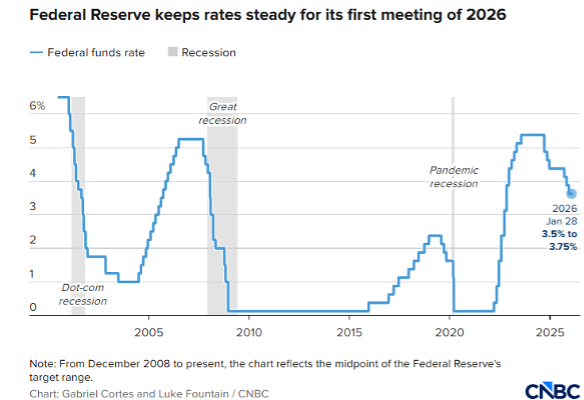
Fed Week is back, with another FOMC meeting and announcement this past Wed (1/28). The Fed has voted 10-2 that it will keep rates on hold at 3.5- 3.75% at its January meeting. The labor market is soft and inflation is elevated. Both are stable, so the balance of risks hasn't changed. With policy now much closer to the Fed's assessment of neutral, there is no hurry to act. Especially because the economy is about to get hit with a large dose of fiscal stimulus (OBBA). Blackrock's Fixed Income CIO Rick Rieder now shows as the most likely successor in prediction markets. (Editor’s note: Not so fast prediction markets! Kevin Warsh has been named Fed Chair.) The biggest surprise in the intermeeting period has been the strength in economic activity. As we are in the heart of Q4 earnings season, we balance continued economic stability with a sobering undercurrent of political uncertainty.
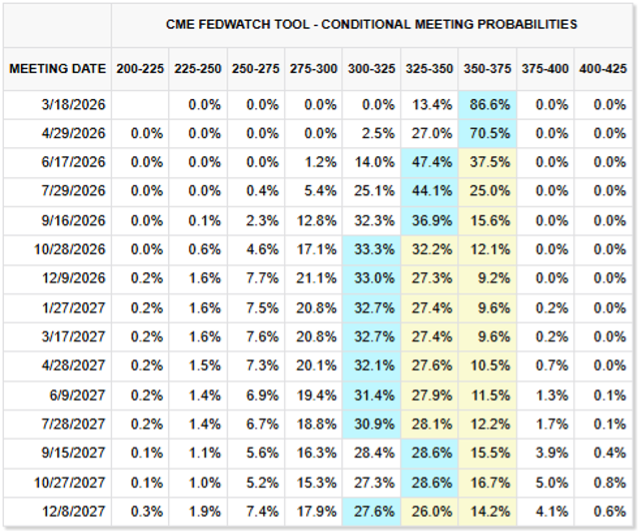
The Federal Reserve expects to maintain expectation at one 25 basis point cut through out the year. The CME Fedwatch tool shows market expectation at 1-2 25 bps cut by end of 2026.
Consumer Spending
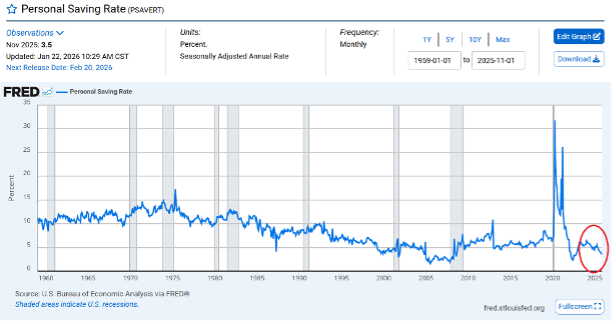
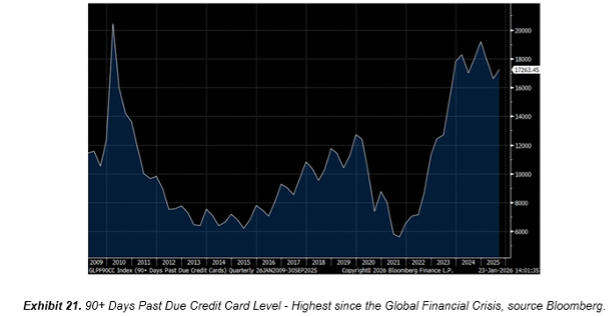
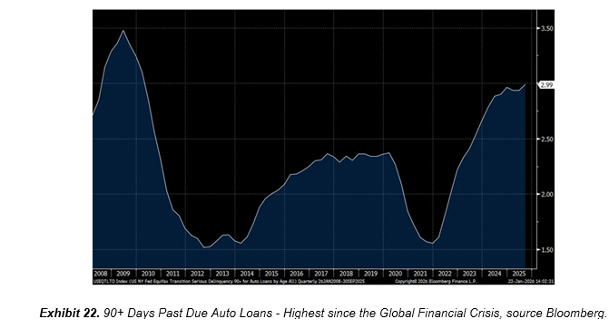
The latest consumer data continues to tell a story of a very bifurcated economy (K shaped) where consumers real incomes are slowing and they are using savings and leveraging credit to continue to spend.
- The personal savings rate declined to 3.5% in November, the lowest reading since 2022.
- Credit delinquencies and auto loan delinquencies have risen to their highest levels since the GFC.
Global Trade
Global Trade/Euro vs. US Dollar
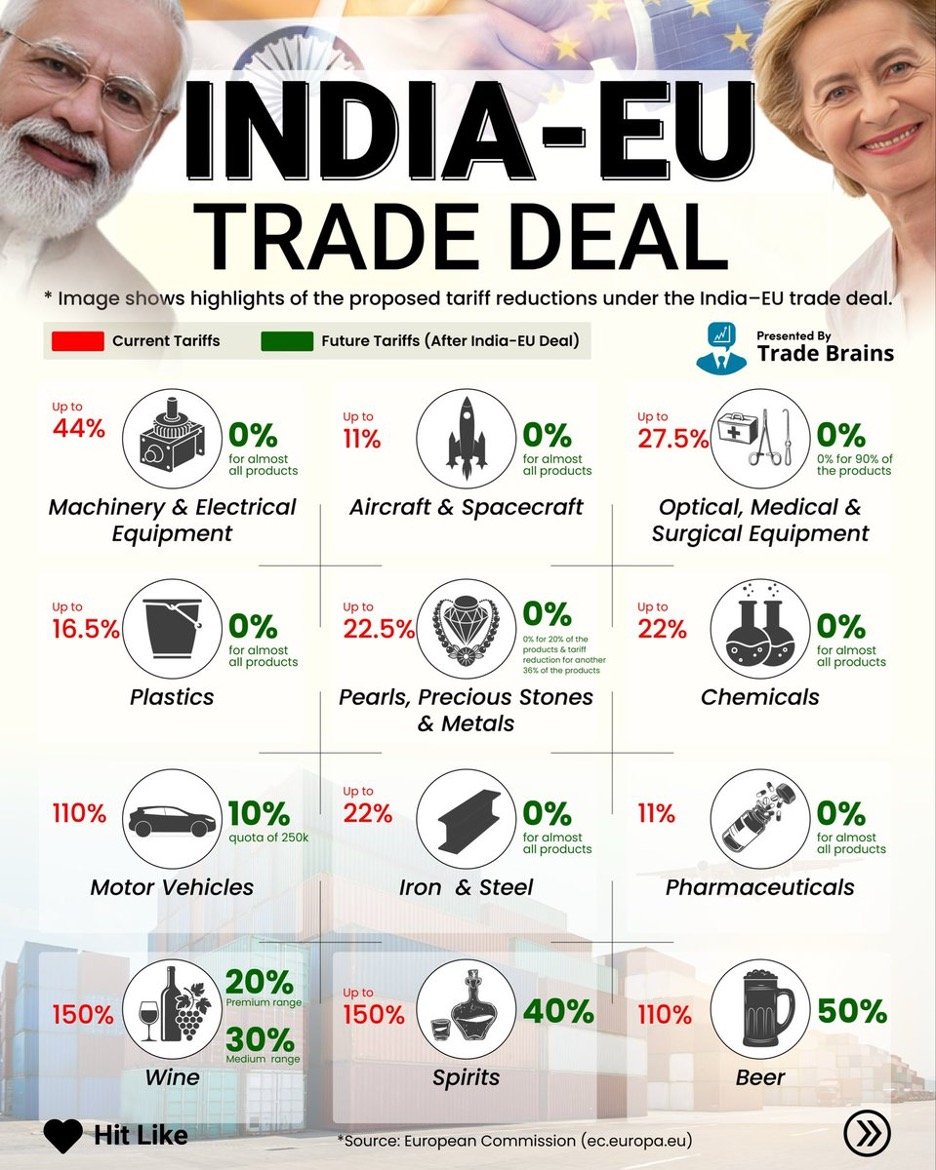
Whether it is Greenland or elsewhere, the Europeans have had trouble with President Trump’s threats on trade. We saw the Euro rise sharply this week. Why? Because Europe moved a different piece on the Chess board, they inked what we believe to be a historic trade deal between the Euro Block and India. This deal has reportedly been at the negotiating table for 20 years, here are a few key details:
- Eliminates tariffs on ~90% of goods trade between EU and India.
- Sets to double EU goods exports to India by 2032.
- Tariffs on cars from EU to India cut from 110% to 10%.
- Tariffs on wines from EU to India cut from 150% to 20%-30%.
- Tariffs on jewelry and textiles from India to EU cut to 0%.
- Tariffs on furniture, chemicals, leather, and metals from India to EU cut to 0%.
Tech
Constructive economic backdrop
Inflation, while a bit higher than ideal, is stable, and despite higher unemployment (which makes rate cuts far more likely than not), growth is picking up (GDPNow for Q4 = 5.4%) thanks to tech-induced productivity gains. Growth with rate cuts is a probability (but expect "higher for longer" on the 10-yr and out as the yield curve steepens).
AI Observations and Big Tech Earnings: We’re in the heart of large-cap tech reporting season, here are three observations as these companies report:
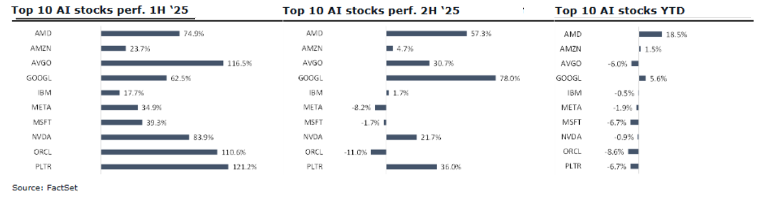
1. The AI trade is much more selective YTD
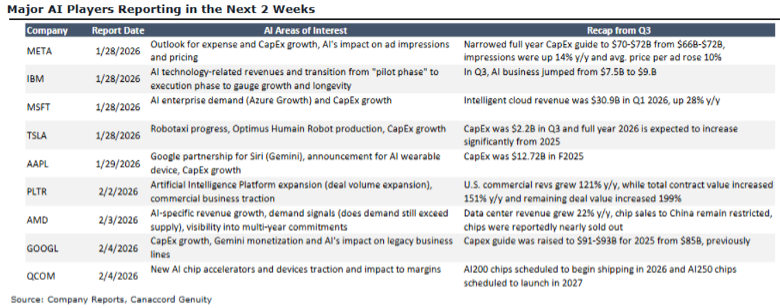
2. Capex guidance for 2026 could create volatility
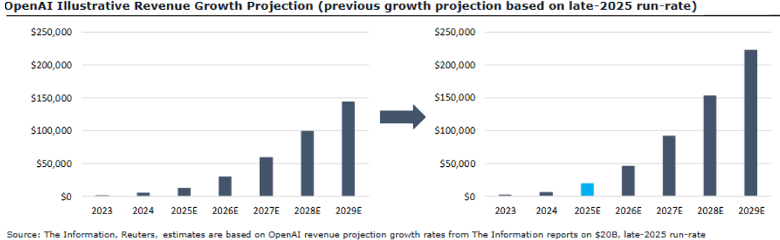
3. OpenAI's late-2025 revenue run-rate of $20B leaves room for upside to growth
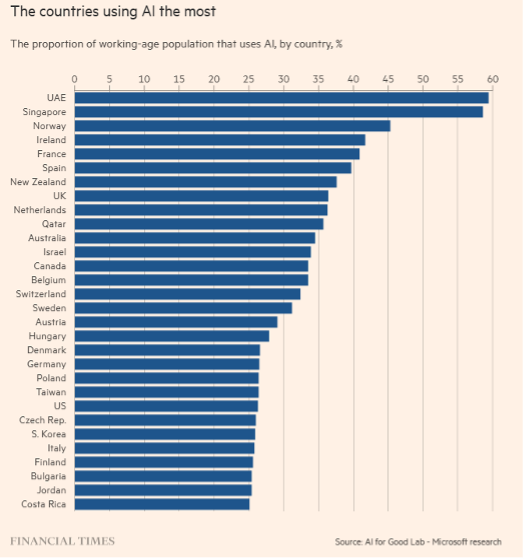
Financial Times reported on AI use outside of the US
Microsoft’s research showed that AI adoption is concentrated in developed countries, with nearly a quarter of the global north using AI in the fourth quarter of 2025, compared with 14% of the global south, and 16 % globally.
Diversification
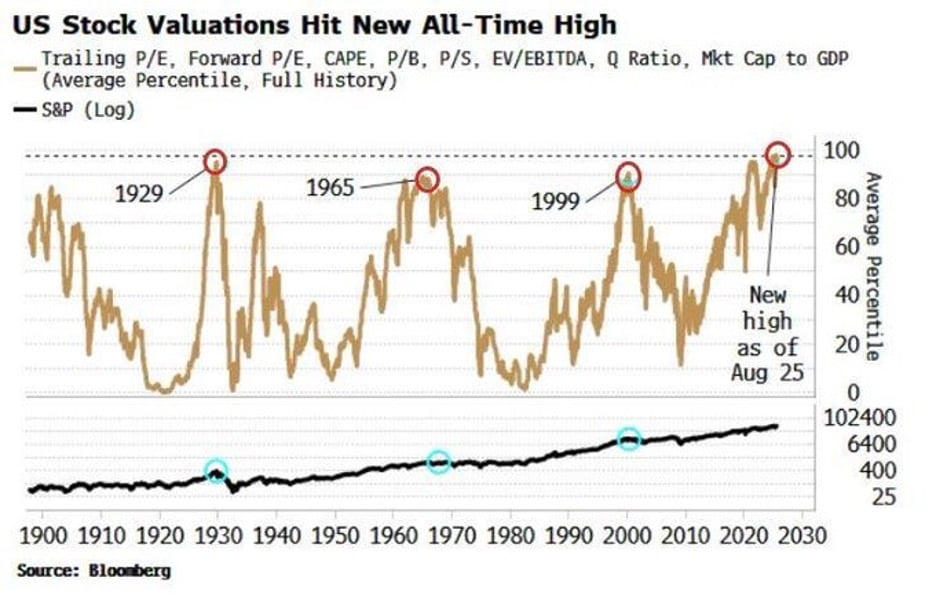
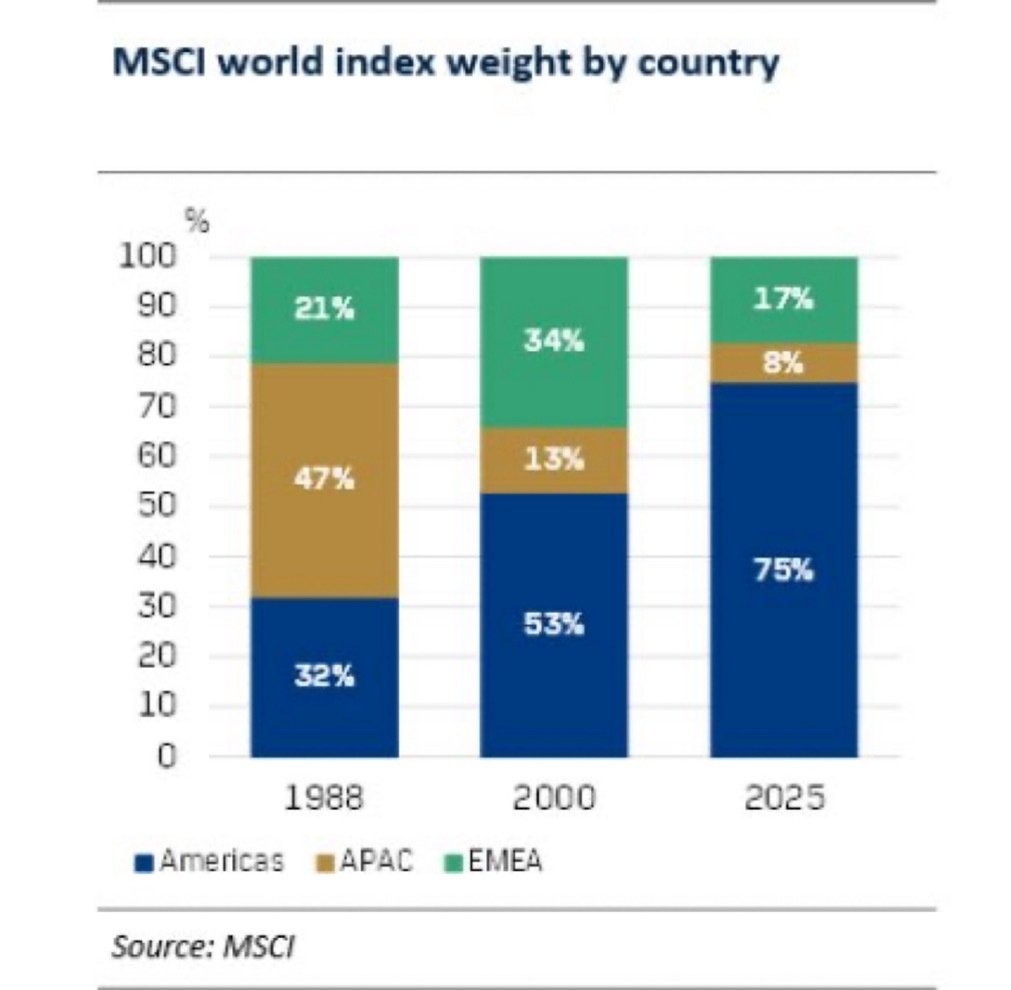
We have been talking about technology in the US now being greater than 42% of market capitalization, less than 15% of sales though, with the capex boom has seen the sector fallen to Free-Cash-Flow/Enterprise Value of just 1% contribution to the US Market. Earlier this week, we saw brand new highs reached, judged by the average valuation of nine different yardsticks over the past 125 years has us continuing to advocate for diversification. The second chart shows how far the US has come.
Private Credit
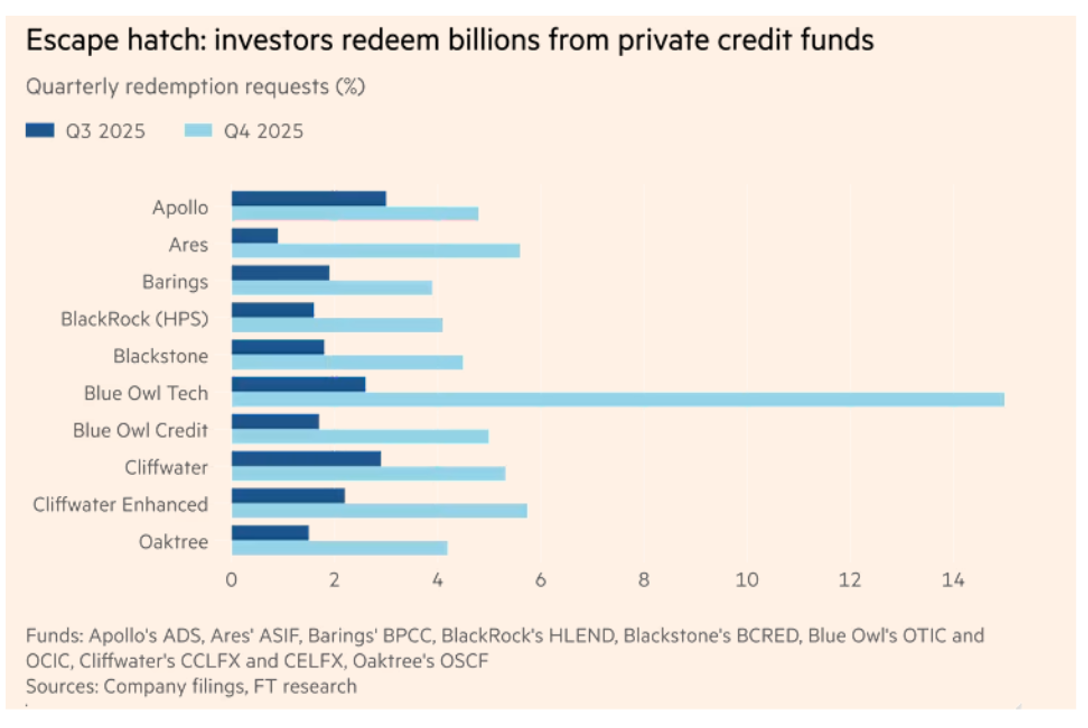
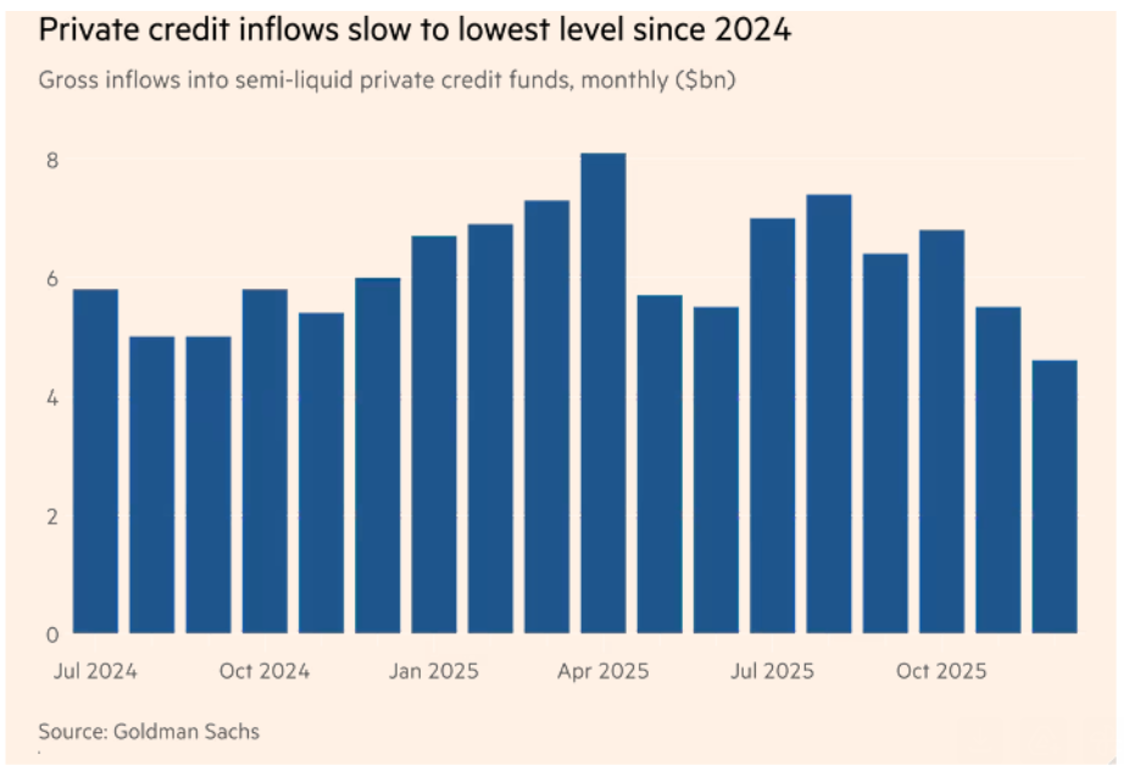
Private credit investors pull $7bn from Wall Street’s biggest funds
Redemptions were running at about 5 per cent of NAV. Investor interest in the asset class had already started to wane last year as the Federal Reserve signaled it would begin to lower interest rates, reducing the returns on offer across credit markets. That prompted several major private credit funds, which invest in floating rate debt, to cut their dividends.
Economic Calendar: Week Ahead (Eastern Time)
Mon, 2/2 @ 10 am: ISM Manufacturing
TBA: Auto Sales
Tues, 2/3 @ 10 am: Job Openings
@ 10 am: ISM Services
Wed, 2/4 @ 815 am: ADP Employment
Thu, 2/5 @ 830 am: Initial Jobless Claims
@ 1050 am: Atlanta Fed President Raphael Bostic speaks
Fri, 1/30 @ 830 am: U.S. Employment Report and Rate
@ 830 am: U.S. Hourly Wages/ Wages YoY
@ 10 am: Consumer Sentiment (Preliminary)