
7 minute read
Smart insight and clear visuals that matter – what we’re watching now and how intention and conviction shape our portfolios.
Markets
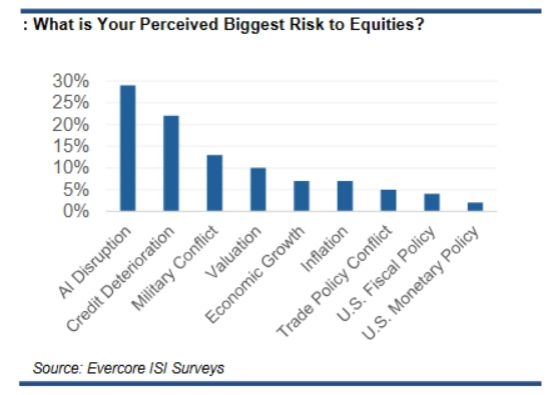
Private credit stress, AI disruption, geopolitical risk, sticky inflation. Four forces that look unrelated but feed into each other in ways the market is only beginning to price. Expect "headline risk" to dominate for the foreseeable future as any energy crisis is likely to accelerate inflationary pressure.
The Return of "Regime Change" Risk
The geopolitical landscape has shifted from "contained tension" to "active intervention," catching markets off-guard with a level of assertiveness not seen in over two decades. The January 3rd capture of Venezuelan President Maduro, followed by last weekend’s direct military strikes on Iran, marks a definitive end to the era of "strategic patience." Investors are drawing parallels to the 2003 overthrow of Saddam Hussein. This isn't just local volatility; it is a fundamental repricing of Global Political Risk Premiums, as the U.S. signals a return to high-stakes, direct interventionism.
The 50% Natural Gas Surge
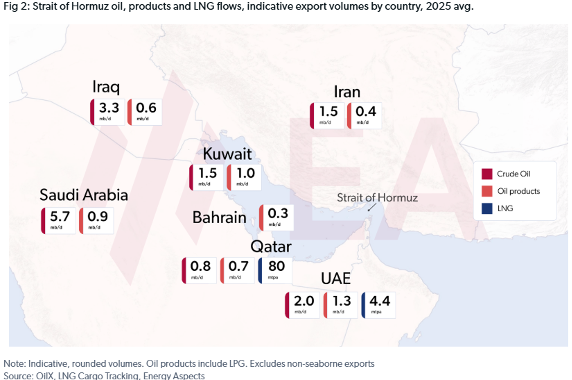
The immediate casualty of the Iran strikes has been the global energy supply chain, specifically the "vulnerability of the bottleneck." Natural gas prices skyrocketed 50% on Monday after Qatar, the world’s critical LNG balancer, was forced to halt production following Iranian retaliatory strikes. Oil rose 8% as shipments through the Strait of Hormuz ground to a near-complete halt. It is no longer just about the closure of the Strait (which can be temporary) but the permanent destruction of oil and gas infrastructure in the region, which would lead to a multi-year supply deficit.
Oil
The WSJ offers a “It’s not the ’70s, but…” article about the inflationary possibilities if higher oil prices stick. With that in mind, the two most important differences between today’s oil price outlook and the one in the ’70 is that Iran is one producer and an isolated one at that. Iranian oil was already under sanction and only sold to China and other nations willing to overlook Iran’s long history of support for terror and disruption. The second major difference is that 40% of US oil came from OPEC nations before the 1973 embargo, and all of the Arab states embargoed the US after the Six Day War. It was the reason OPEC was formed. This time, the entire region is opposed to Iran, and the biggest oil producers are outside the region. The US is one of them.
What makes today’s situation similar to the ’70s is the extent of the disruption. According to Bloomberg News, Iraq is shutting down production at Rumaila as storage is filling up and the oil cannot get out because ships do not dare cross through the Strait of Hormuz. Saudi is rerouting oil to other ports, away from the Red Sea, but that, too, will interrupt supplies. This time, oil that cannot ship is withheld from the world. Prices have not yet risen by anything like the increase in the '70s, but the potential for disruption, especially if the war drags on long enough to deplete defensive systems, is significant.
Oil has an immediate, direct impact on inflation. In the US, we emphasize changes in core inflation indices, but energy prices affect headline (actual) inflation directly and affect the core indirectly. Every good and service sold has an energy component. The bond market is starting to reduce rate cut bets as a result. There is now one full cut priced in this year, plus a 50% chance of a second. Rates are still expected to drop, but later. In effect, this is the intersection of the pop in oil due to the war in Iran and the FOMC’s new show-me attitude toward inflation. There is zero patience on the FOMC for looking beyond one-off or temporary inflation pressure. Until inflation falls, the Fed will not cut.
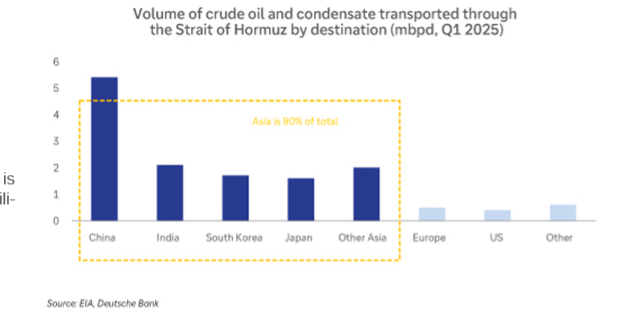
The chart below explains why late in the day yesterday, it was reported that China is trying to cut a deal with Iran to get safe passage through the Strait of Hormuz. China is the #1 customer of that oil. Oil was up 7% this morning.
The events over last weekend represent a significant escalation in geopolitical risk, but with the potential for a significant long-term payoff. So far, investors are treating this as a risk event to absorb rather than a regime change for capital markets. History supports that instinct. Equities have generally recovered quickly from geopolitical shocks, with the notable exception of sustained energy-driven inflation. Whether this follows that pattern depends almost entirely on the energy supply picture and the conflict's duration. At this time, we are not recommending reactive changes to long-term allocations.
Tech
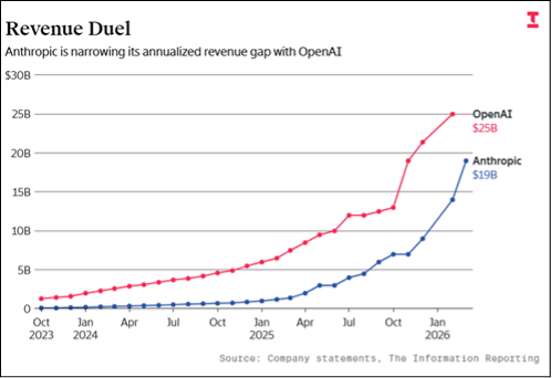
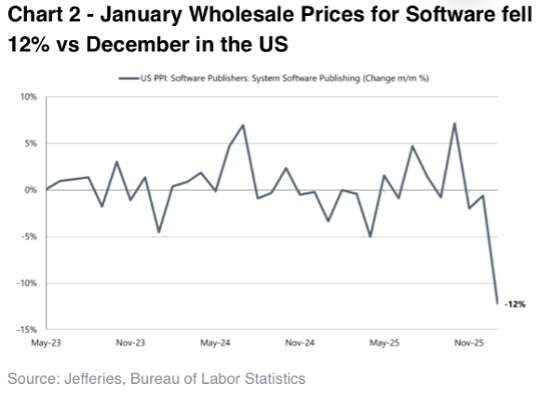
Elsewhere, the software component of the US PPI showed a surprising downturn that hurt those stocks when PPI was reported last week. I thought the data was instructive and provided more appropriately in comparison against the revenue growth in AI.
Real Estate
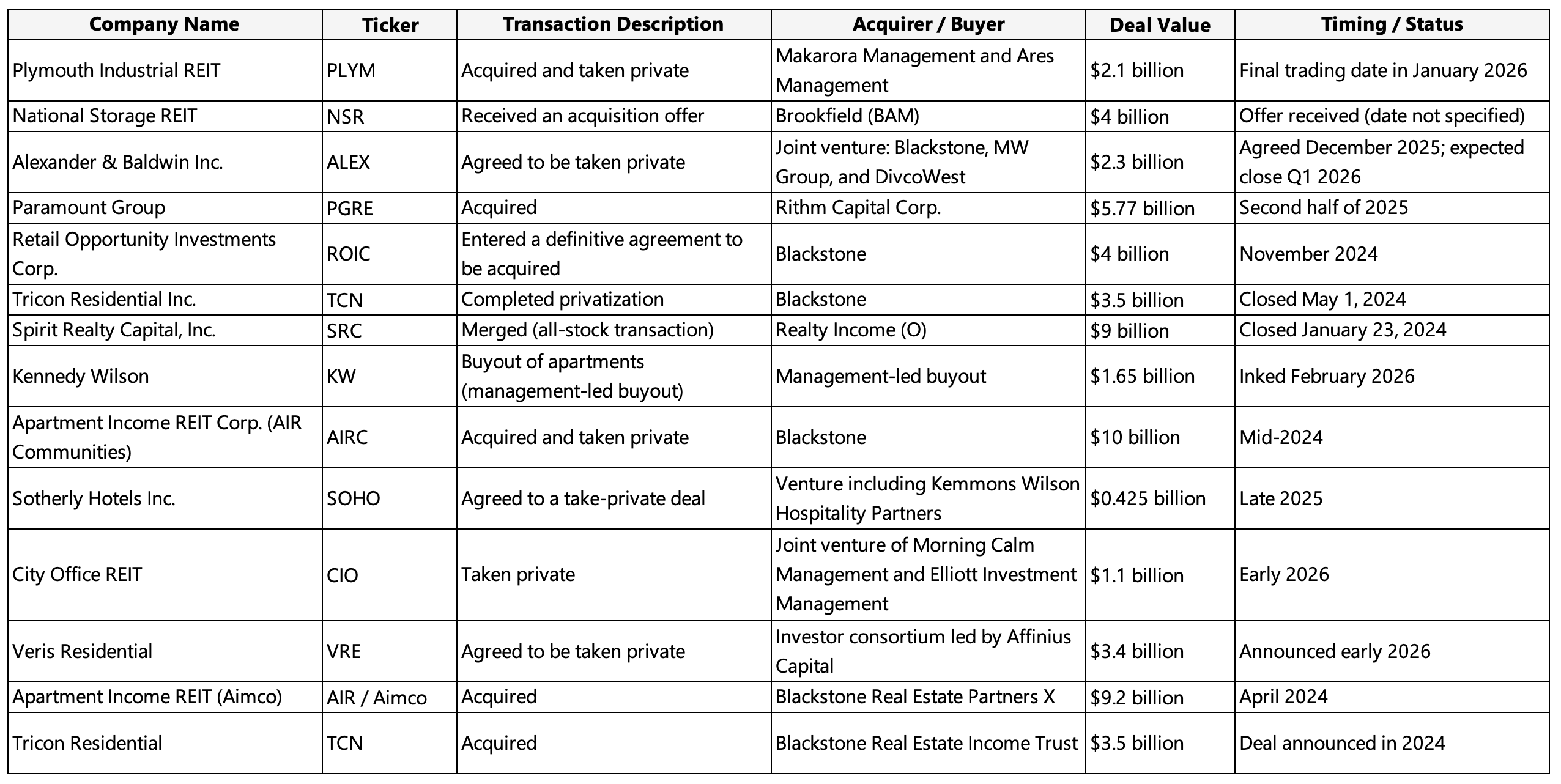
We are overweight real estate given stalled supply, steady demand, years of underperformance, falling rates that lower the cost of debt but also make real estate more appealing versus fixed income and strategic value. We have seen that strategic value come often over the past nine quarters and that’s what we want to highlight today.
The average premium for the specified REIT buyouts over the past 2 years is approximately 41.7% based on their unaffected closing prices. This average is significantly skewed by the outlier Sotherly Hotels, which command a record-breaking 152.7% premium. Excluding that deal, the average for the remaining finalized buyouts drops to 31.6% which is VERY HIGH for a financial asset which has seen historic REIT takeover premiums at less than half of these rates, or an average 15% average takeout premium. We think the number of deals, and how desperate the buyers have been is supportive of the portfolio decisions seen throughout our models. Overnight, Reuters reported that another REIT, Whitestone, has hired Bank of America after both Blackstone and TPG have expressed interest in buying them out.
Private Credit
Another Private Gate Goes up
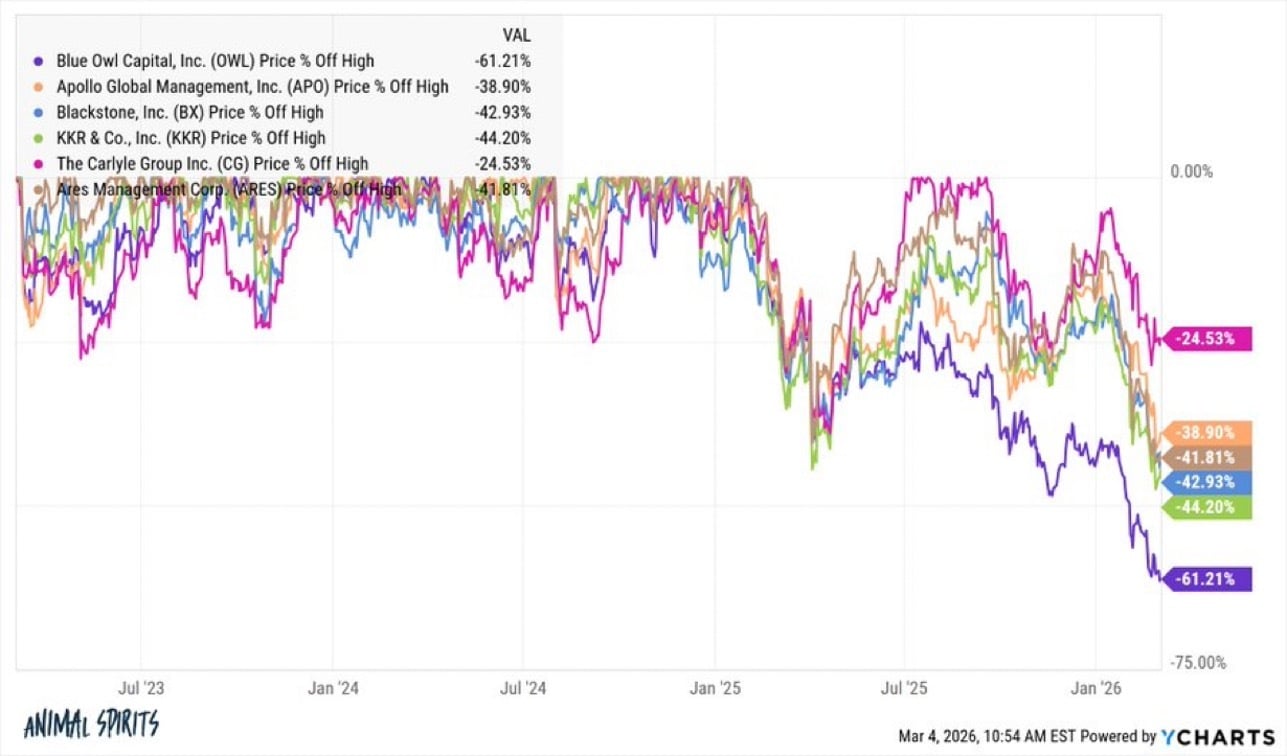
As we have been reporting since late last summer, the purveyors of private market investments have been under fire. This morning a Blackrock private credit fund, this one in corporate lending registered a 9.3% redemption request for a top 5 fund that was $26 billion in size. The math was then that it was prorated 54% so gates are up. This has brought more pain to the private manager community, stock chart below as of last night’s close.
International Equities
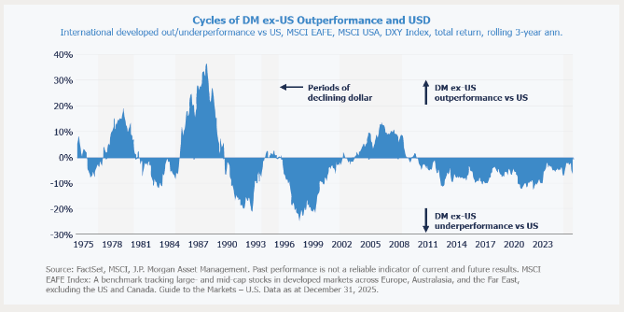
With the S&P 500 increasingly dominated by a small group of mega cap tech names, its top 10 stocks now making up nearly 40% of the index, investors face rising concentration risk. If the dollar continues to soften, US investors could see an additional tailwind supporting international equity performance, enhancing both diversification and return potential. The expectations of cooling US growth, and evolving global capital flows all point to a dollar that may remain under pressure. International equities are experiencing strong earnings acceleration and reflect significant valuation discount versus US markets. Growth in earning may be boosted by lagged effects of aggressive rate cuts across Europe and major fiscal stimulus programs in Germany, broader Europe, and Japan. At the same time, non-US markets continue to trade at a 32% discount to the S&P 500, with P/E ratios of 13–14x vs. 22–23x in the US, and sector wide discounts across every industry, providing both upside potential and a margin of safety.
Economic Calendar: Week Ahead (Eastern Time)
Tues, 3/9 @ 10 am: Existing Home Sales
Wed, 3/10 @ 830 am: Consumer Price Index/ CPI YoY
@ 830 am: Core CPI/ Core CPI YoY
@ 200 pm: Monthly U.S. Federal Budget
Thu, 3/12 @ 830 am: Initial Jobless Claims
@ 830 am: U.S. Trade Deficit
@ 830 am: Housing Starts
@ 830 am: Building Permits
Fri, 3/13 @ 830 am: GDP (First Revision)
@ 830 am: Personal Income/ Personal Spending
@ 830 am: PCE/ Core PCE Index
@ 830 am: Durable Goods Orders
@ 10 am: Job Openings
The Team Behind Friday Focus

Mary Ahn
Investment Research and Portfolio Strategy Manager

Cal Jones, CFA
Managing Director of Fixed Income

Eric Speron, CFA
Managing Director of Equities

Alton Tjahyono, CFA
Sr. Investment Strategist