

6 minute read
Smart insight and clear visuals that matter – what we’re watching now and how intention and conviction shape our portfolios.
Markets
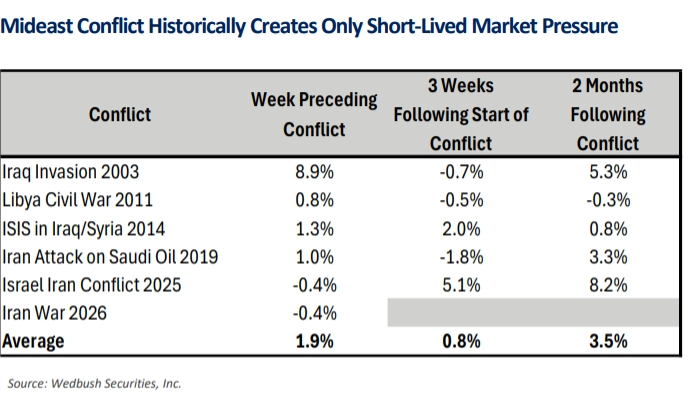
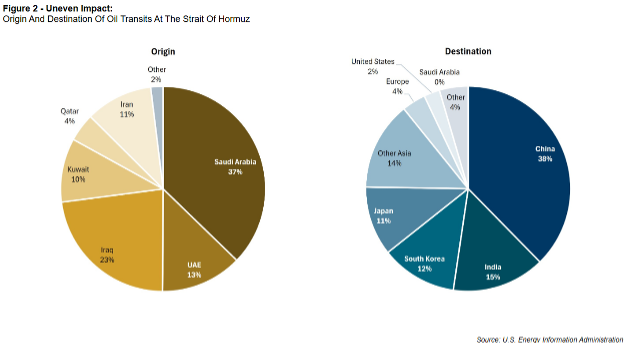
Over the past 25 years, geopolitical shocks in the Mideast have created noise, not structural damage to markets. The average return two months following conflict was 3.5% for five identified shocks. The initial reaction to the current Iran War is tracking with history, but risk of a spreading conflict and/or sustained oil industry disruption cannot be dismissed.
Meet the new boss, same as the old boss
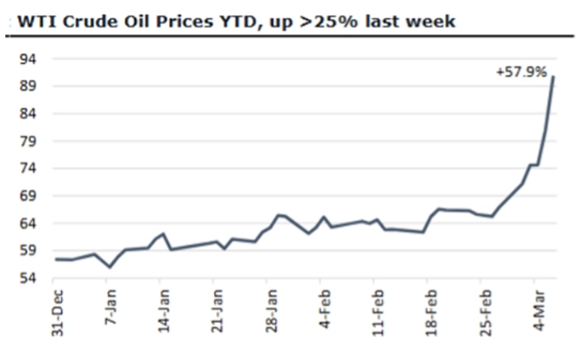
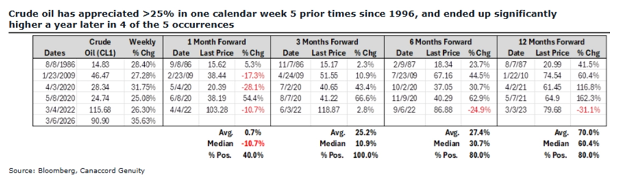
Last week Iran named Mojtaba Khamenei, son of the deceased prior leader Ayatollah Ali Khamenei, as its new supreme leader. This isn’t regime change, nor is it the choice of a country looking to appease its enemy and seek an off-ramp. That contributed to a sharply lower trade in Asia, earlier in the week, Nikkei 225 down 5% and Korean Kospi down 6%. Given that the son will likely be as much of a hardliner as the father, this most likely extends the duration of this conflict. A longer war, among many other things, would mean larger and more prolonged oil price shock. Initially, with oil prices around $15 higher than the pre-war level, inflation concerns were limited. But the most recent escalation leading oil prices to rise above $100 could become concerning if it proves persistent.
More on Oil
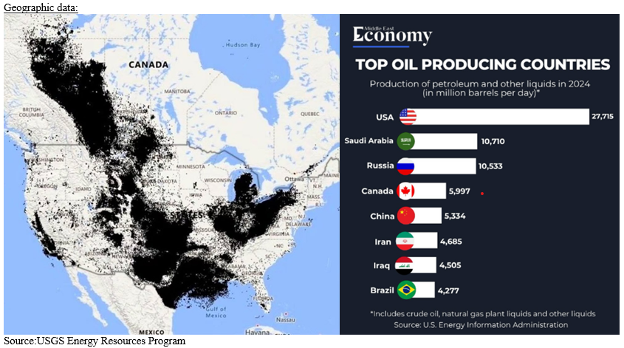
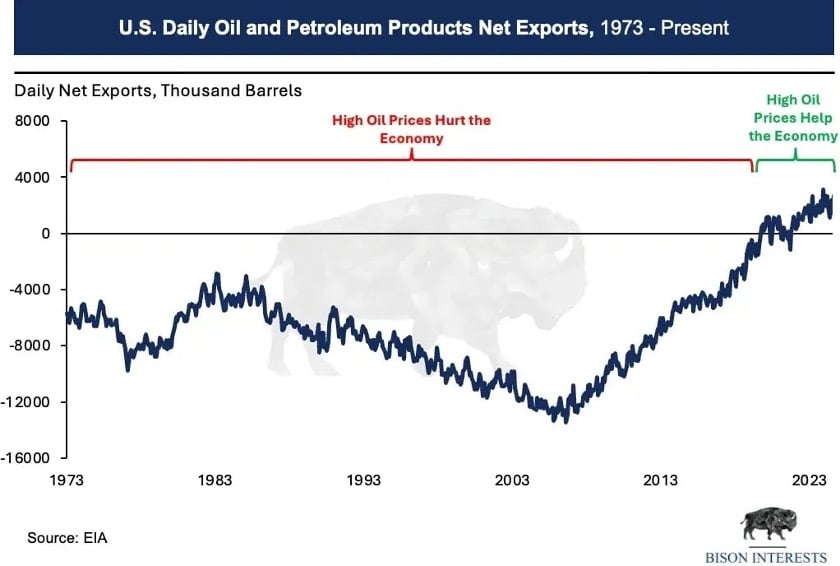
Yesterday, one of the things that exacerbated the slide down in the market was a quote from President Trump who posted, “The United States is the largest oil producer in the world, by far, so when oil prices go up, we make a lot of money.” This is in fact true as we will show below but the market was displeased about the change in the messaging to give the administration the ability to sit through a longer war as our country is a beneficiary of the spike in oil.
The KEY detail: We are the world’s largest oil producer so higher oil prices can actually benefit the United States, of course the question remains, well how about on a net basis because we spend on oil too? As a thought leader from Bison investments said simply, “As a net exporter of petroleum products, higher oil prices increasingly help rather than hurt the U.S. economy.”
Prices
Pain at the pump
The average gasoline price is around $3.55 today, compared with around $2.90 in February, up 50 cents. If oil stays around $100 the gasoline price will reach around $3.85, $1 above February. In the very short term that would be an annualized hit to consumers of $105bn or 78 per cent of the One Big Beautiful Bill (OBBB) boost. Enough to wipe out tax refunds from OBBB on an annualized basis for all but the top 30 per cent of consumers.
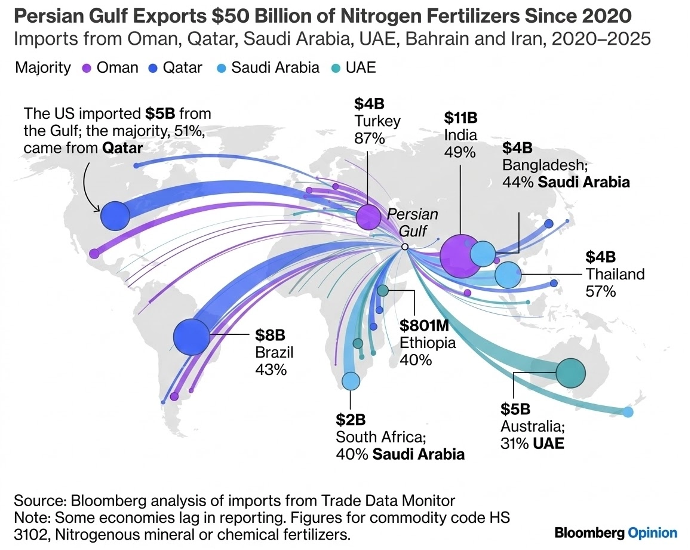
Ammonia → Urea → Crop yields → Pain at the grocery store
The Iran situation is stalling access to the country’s low-cost urea and ammonia facilities. Ammonia is the core building block of modern nitrogen fertilizer, produced primarily from natural gas. So far, urea prices have shot up by about 25% since the war, taking the commodity to levels not seen since Russia’s invasion of Ukraine, which disrupted both grains and fertilizer exports. Roughly 45% of the global urea trade is sourced from producers with manufacturing sites in the Persian Gulf. When ammonia or urea prices rise, farmers face higher input costs and either plant less or passed through prices, contributing to higher wholesale food prices.
Rates
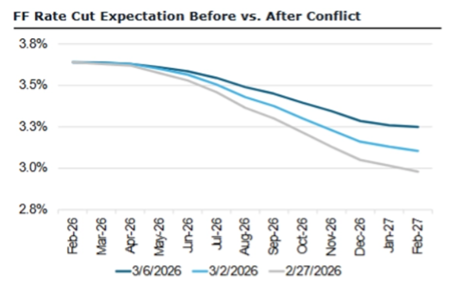
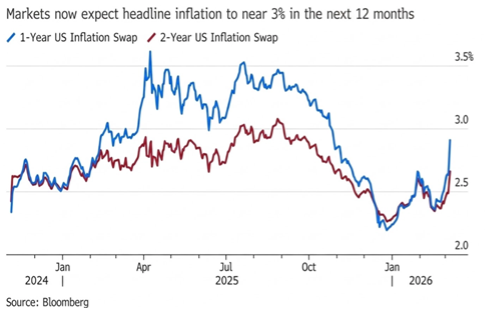
The impact of the war on inflation may be temporary, but it is already dampening the fragile outlook for rate cuts, as recent Fed speak has emphasized inflation risk over employment weakness.
Private Credit
Private Credit, Leveraged loans, and Software
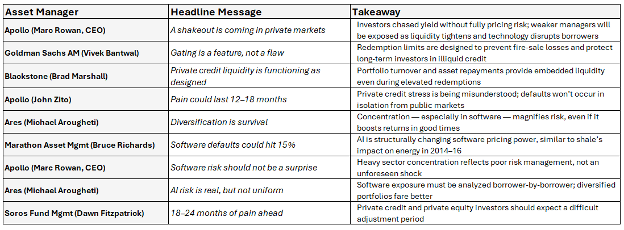
Private credit is facing its first real liquidity and confidence test, not from defaults yet, but from redemptions and gating mechanics. Last week marked the first clear “line in the sand” gating event, led by BlackRock/HPS. In late February, Blue Owl changed the fund’s liquidity structure by eliminating future redemptions, converting the vehicle from a quarterly tender‑offer fund, which allowed investors to periodically redeem shares, to a “return of capital” structure, under which investors can no longer proactively redeem. Interval funds have not yet been gated, but redemption pressure and secondary‑market activity suggests liquidity stress is building rather than resolving. Software is ground zero for credit risk, given high leverage, AI-driven pricing pressure, and heavy exposure across direct lending, leveraged loans, and CLOs.
Key headlines from the Bloomberg Invest Conference (New York, March 3–5, 2026)
Private Equity
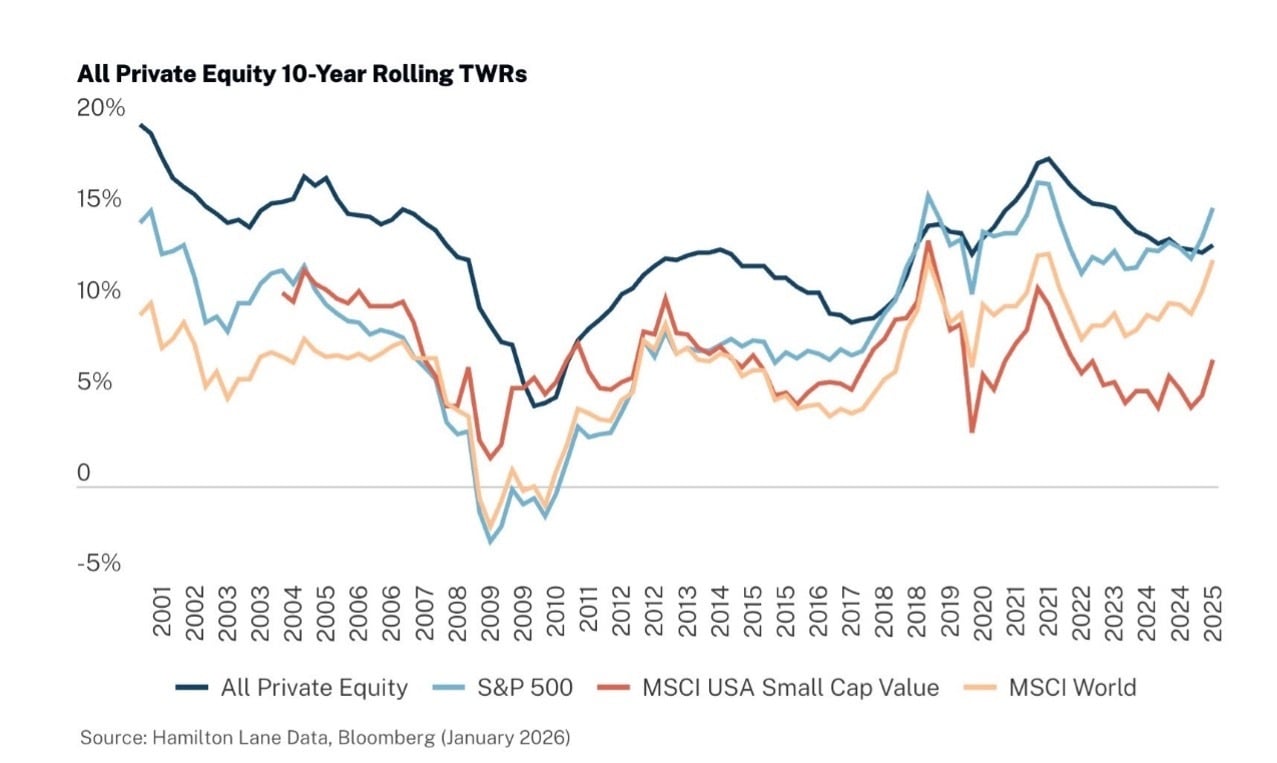
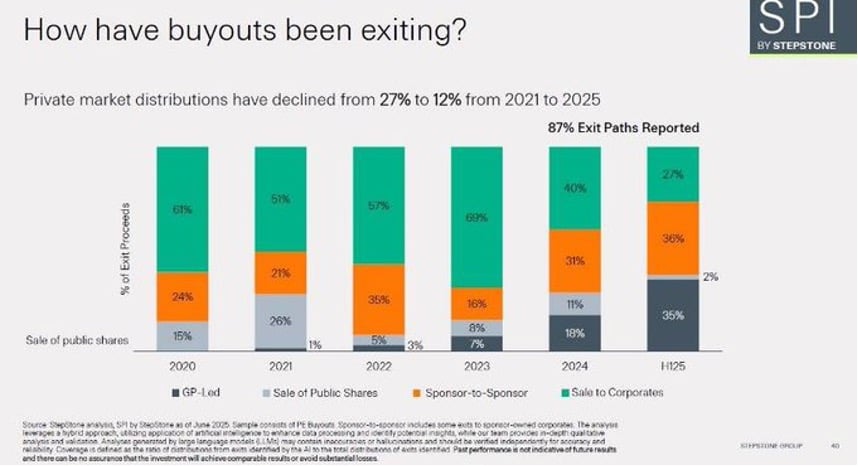
While the market has been choppy the past few weeks, and we have spilled plenty of ink on private credit, there are a few interesting mile posts to note on private equity. For 2 decades, private equity has been able to say we are the best returning house on the block. But given the stalled exits, their returns have been suppressing as well. The first graph shows how the best house for returns is now the public markets, (and of course liquidity), this will not help the private equity salesperson defend those falling PE share prices. The second chart is a bit less novel, it shows something we have been reporting, exits aren’t happening in the public markets but graphically answers where those businesses are going, the answer is the data shows it’s a game of hot potato as 70% of PE exits are sales to other PE firms or secondary transfers within the same fund to another fund, with sales to strategic buyers accounting for less than 30%.
Economic Calendar: Week Ahead (Eastern Time)
Mon, 3/16 @ 830 am: Empire State Manufacturing Survey
Tues, 3/17 @ 10 am: Pending Home Sales
@ 10 am: Home Builder Confidence Index
Wed, 3/18 @ 830 am: Producer Price Index/ PPI YoY
@ 830 am: Core PPI/ Core PPI YoY
@ 10 am: Factory Orders
@ 200 pm: FOMC Interest-Rate Decision
@ 230 pm: Fed Chair Powell Press Conference
Thu, 3/19 @ 830 am: Initial Jobless Claims
@ 830 am: Philadelphia Fed Manufacturing Survey
@ 10 am: Wholesale Inventories
@ 10 am: New Home Sales
The Team Behind Friday Focus

Mary Ahn
Investment Research and Portfolio Strategy Manager

Cal Jones, CFA
Managing Director of Fixed Income

Eric Speron, CFA
Managing Director of Equities

Alton Tjahyono, CFA
Sr. Investment Strategist