

10 minute read
Smart insight and clear visuals that matter – what we’re watching now and how intention and conviction shape our portfolios.
Markets
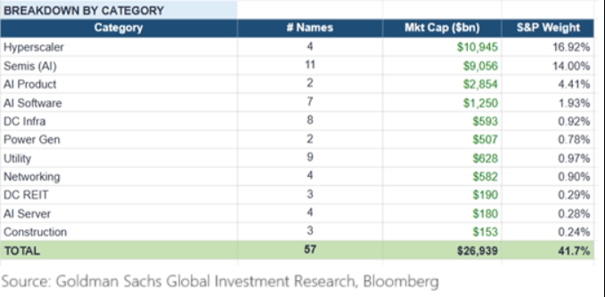
We have reached a point where nearly half of the S&P 500's performance is tied to a single "narrative trade.” On April 21, 2026, Goldman Sachs released a chart showing "AI-linked stocks" now account for 45% of the S&P 500 weight, up from ~25% at the end of 2022. Analysts typically group AI-linked stocks into three layers (Infrastructure, Hyperscalers, and Enablers/Adopters). Concerningly, the Hyperscalers (42%) are the primary customers of the semiconductor firms (also in the 42%) potentially creating a "circular spending loop" and in turn high correlation between these stocks. It’s possible that if the ROI on that CapEx doesn't materialize by the end of 2026, the concentration that drove the index to 7,200 could become its primary liability.
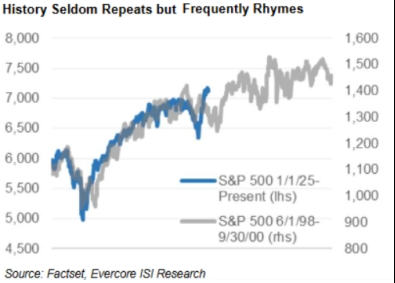
History Seldom Repeats, but Frequently Rhymes
The AI-driven bull market has, understandably, invited comparisons to the Dotcom era. The parallels are visible: a high degree of index concentration in a few tech leaders and valuations that have reached similarly lofty heights. We’ve even watched price action around "Liberation Day" track the 1998 LTCM crisis period with remarkable precision. History often rhymes, and in this cycle, that rhyme has manifested as heightened volatility paired with aggressive upside. However, while we remain mindful of the eventual 2000 "bubble burst," the current environment offers a different fundamental profile. Today’s market is characterized by a significantly higher quality of earnings than its predecessor, opening the door for a meaningful extension of the cycle, particularly if the geopolitical pressure on oil prices begins to recede. All this being said, we keep in mind, the past doesn’t predict the future.
Market Support and Diversification
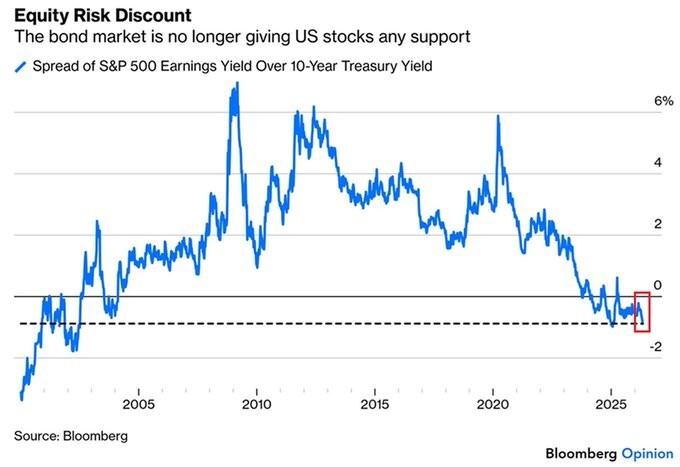
For much of the past two decades, equities benefited from a backdrop where bond yields remained relatively low, effectively compensating investors for taking on equity risk. As we have noted previously, the spread between the earnings yield (the inverse of the price-to-earnings ratio) and the 10-year Treasury has narrowed meaningfully. Bloomberg data this week shows that this spread has now compressed to levels last seen around the turn of the century.
While we hope that energy inflation will work its way through the system and de-escalation in the Middle East could create room for rate cuts, elevated debt levels remain an immovable force.
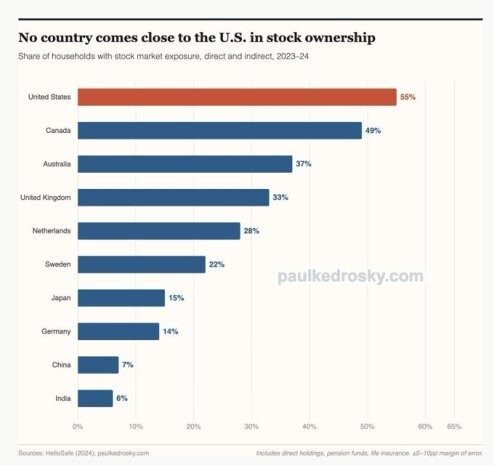
Forty-five years ago, America’s debt crossed the $1 trillion mark. This year interest on America’s debt will exceed $1 trillion. However, the American investor remains heavily invested and for this reason we have recently elevated our diversification further into real estate following an earlier shift into commodities.
Tech
Beyond the "Human Ceiling"
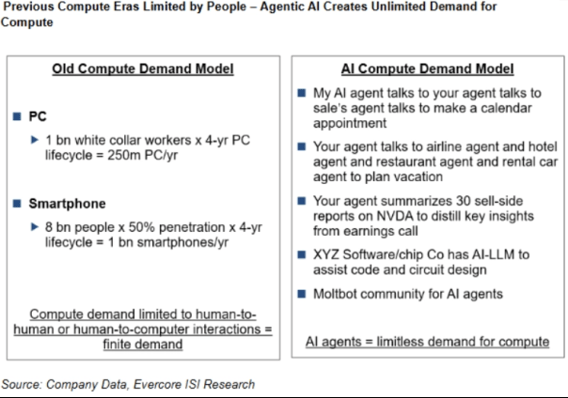
A frequent question we encounter is whether the current parabolic growth in AI token consumption is sustainable or merely a temporary spike. In our view, the ceiling for growth is significantly higher than previous cycles suggest. The demand for legacy compute devices, PCs and cellphones, was structurally capped by the global population; there is a finite limit to how many screens a single person can operate.
The introduction of Agentic AI breaks this 1:1 human-to-device ratio. Each individual can, and likely will, deploy multiple agents capable of interacting with the AI agents of other people and businesses in parallel. We are seeing the extreme end of this phenomenon with OpenClaw (previously Clawdbot and Moltbot), a community where AI agents interact in a public forum without human intervention. This shift from human-scale demand to machine-scale interaction represents a durable layer of impact that fundamentally changes our long-term compute trajectory.
Trimming staff to free up capital for infrastructure
U.S. tech employment is rapidly contracting. Tech companies announced 81,747 layoffs in Q1 2026, the highest quarterly total since at least Q1 2024. Layoffs have more than doubled from the previous quarter and have risen +580% since Q4 2025. March alone saw 45,800 announced job cuts, the worst single month for tech layoffs in at least 2 years. Tech layoffs are set to remain elevated with Meta's recent plans to cut ~8,000 employees. Furthermore, Microsoft is offering voluntary retirement to ~7% of its U.S. workforce, which could transition into layoffs if participation is low.
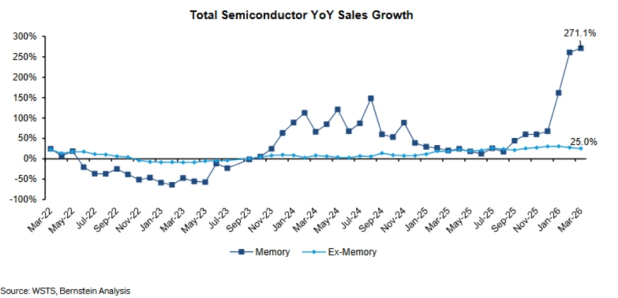
This comes as tech giants shift spending toward AI chips and data centers - total semiconductor sales grew 88.1% YoY in March after rising 87.7% in February; memory sales almost quadrupled at 271.1% YoY.
Software
It has been said that just as AI may be inflationary in the physical world, it is deflationary in the digital world. Year-to-date software stocks’ underperformance has reflected this dynamic as strength in energy and raw materials has contrasted with a difficult period for software. While we still believe that this framing may hold directionally as AI can enable a single worker to produce exponentially more output, putting pressure on the price of digital services and raising legitimate concerns about disruption and commoditization in parts of the software ecosystem; what is becoming clearer is that the story may be more nuanced.
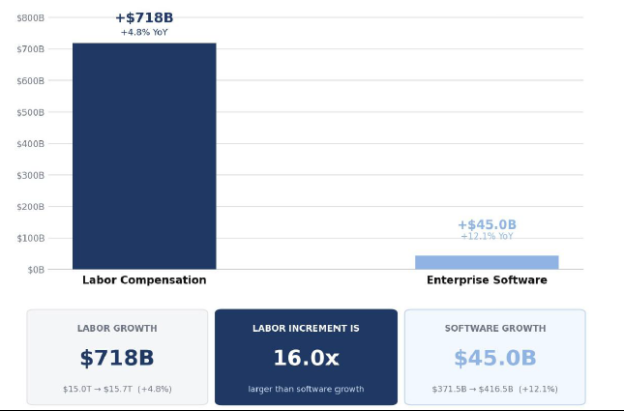
Rather than simply reducing demand for software, AI could be shifting where software spend comes from, labor budgets not IT budgets. In that context, AI may compress pricing in certain areas simultaneously expanding the overall opportunity set for deeply embedded platforms that enable, govern, and operationalize AI within enterprises. Not all software is created equal.
While AI can be deflationary at the application level, it may ultimately prove expansionary at the system level, benefiting software companies that are central to enterprise workflows and positioned to capture this shift.
Gartner data highlights the scale difference: IT spending is about $274B (~2% of revenue), while U.S. labor costs total $15.7T—roughly 38x larger than the $400B software market.
U.S. Labor Compensation vs U.S. Enterprise Software Spend (log scale)
.png?width=560&height=278&name=U.S.%20Labor%20Compensation%20vs%20U.S.%20Enterprise%20Software%20Spend%20(log%20scale).png)
Sources: U.S. Bureau of Economic Analysis; Gartner Worldwide IT Spending Forecast, July 2025 (2024 software figures) and February 2026 (2025 software figures). U.S. enterprise software estimated at approximately one-third of worldwide software spend.
According to Spyglass Capital Management, “If AI allows software to capture even 10% of U.S. labor costs, that is a $1.5 trillion incremental opportunity, roughly four times the size of the current U.S. enterprise software market. We believe this represents a TAM expansion for the software vendors positioned to capture it. As enterprises shift labor dollars toward AI spend, the addressable market for software that can orchestrate, contextualize, and govern AI activity grows meaningfully beyond the traditional IT budget envelope”.
Incremental Dollar Growth in Labor Compensation vs. Enterprise Software from 2024 to 2025
Sources: U.S. Bureau of Economic Analysis; Gartner Worldwide IT Spending Forecast, July 2025 (2024 software figures) and February 2026 (2025 software figures). U.S. enterprise software estimated at approximately one-third of worldwide software spend.
Real Estate
Public REITs
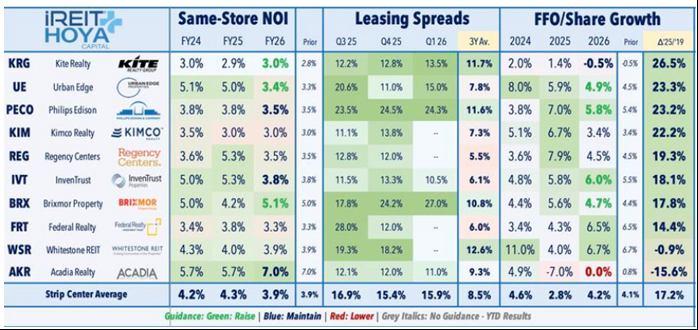
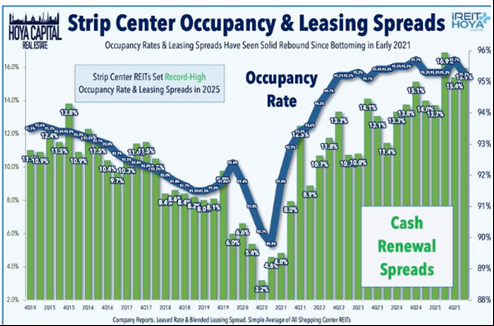
Strip center REITs are sustaining mid-teen leasing spreads, supported by still-tight supply-demand dynamics. While occupancy has eased slightly from record highs, fundamentals remain very healthy across the middle and upper-tier retail properties in which REITs focus.
Source: Hoya Capital
Source: Hoya Capital
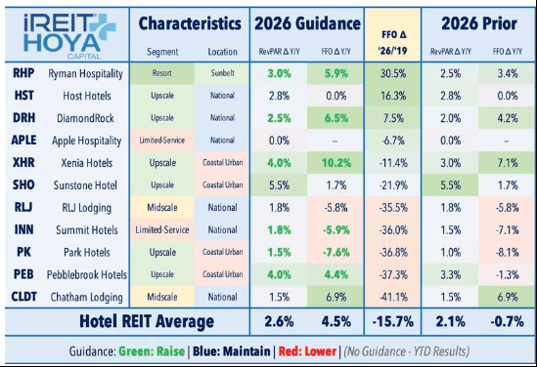
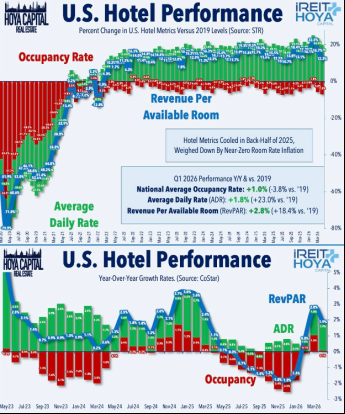
Hotel REITs delivered an impressive slate of results raising both their full-year FFO and RevPAR outlooks. Guidance increases offered a notable counterpoint to lingering concerns over slowing leisure demand and macro uncertainty, showing that higher-end hotel demand, group travel, and special-event calendars remain resilient.
Source: Hoya Capital
Source: Hoya Capital
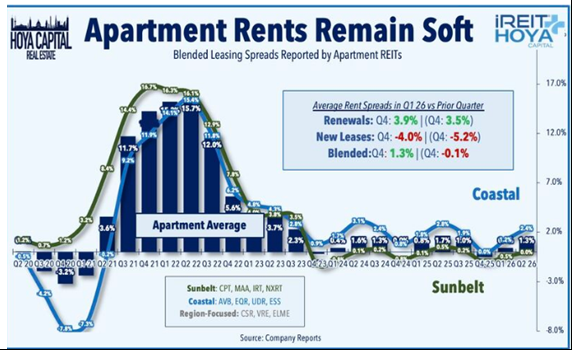
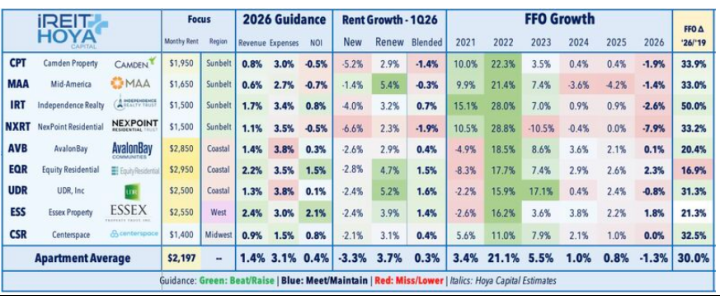
Coastal markets continue to outperform national averages, driven by limited new supply and steady renter demand. Centerspace (CSR) noted Minneapolis was the outlier, with Q1 blended spreads of +1.3% that accelerated to +3.8% in April, including +4.3% on new leases. Denver remains the primary underperformer. Q1 blended spreads were -5.1%, concessions reached their highest level to date, and regulatory changes are weighing on reimbursement revenues.
Source: Hoya Capital
Source: Hoya Capital
ETF Fees
Two months ago, Fidelity announced that it would begin charging a $100 service fee on purchases of specific ETFs, ending the 6-year hiatus on ETF fees. The new fee structure, affecting over 140 ETFs, takes effect on June 1, 2026. RIABiz ran an article yesterday stating, Schwab may adopt a similar approach.
Schwab has indicated it could seek a portion of ETF fee revenue (up to 15%) and charge investors $100-per-trade for using non-compliant ETF managers. While some managers have already negotiated arrangements to avoid such charges, over time, these changes may be reflected in higher expense ratios.
The two firms administer a combined $26 trillion, including approximately $4.5 trillion in ETFs. According to RIABiz, approximately $3.8 trillion or 84% may be impacted by these fees.
Economic Calendar: Week Ahead (Eastern Time)
Mon, 5/11 @ 10:00 AM: Existing Home Sales
Tues, 5/12 @ 8:30 AM: Consumer Price Index/ CPI YoY
@ 8:30 AM: Core CPI/ Core CPI YoY
@ 2:00 PM: Monthly U.S. Federal Budget
Wed, 5/13 @ 8:30 AM: Producer Price Index/ PPI YoY
@ 8:30 AM: Core PPI/ Core PPI YoY
Thur, 5/14 @ 8:30 AM: Initial Jobless Claims
@ 8:30 AM: U.S. Retail Sales
@ 8:30 AM: Import Price Index
Fri, 5/15 @ 8:30 AM: Empire State Manufacturing Survey
@ 10:00 AM: Home Builder Confidence Index
The Team Behind Friday Focus

Mary Ahn
Investment Research and Portfolio Strategy Manager

Cal Jones, CFA
Managing Director of Fixed Income

Eric Speron, CFA
Managing Director of Equities

Alton Tjahyono, CFA
Sr. Investment Strategist